The Best Japanese Denim Brands, and How to Choose Between Them
The best Japanese denim brands compared: Momotaro, Iron Heart, Samurai, Full Count, Pure Blue Japan, Oni and more, with the denim each is known for.
By BLW · · 6 min read
The best Japanese denim brands are the specialists that weave or commission their own selvedge cloth and cut it into jeans built to last: Momotaro, Iron Heart, Samurai, Full Count, Pure Blue Japan, Oni, Studio D'Artisan, Sugar Cane, The Flat Head and Warehouse are the names most enthusiasts start with. None of them is simply "the best". Each has a character, from soft and clean to heavy, slubby and hairy, and the right one depends on what you want your jeans to feel like and how you want them to fade.
This guide sets out what each brand is known for, the denim it makes and who it suits, then how to choose. If you are new to the cloth itself, start with what selvedge denim is.
The Osaka Five: where it started
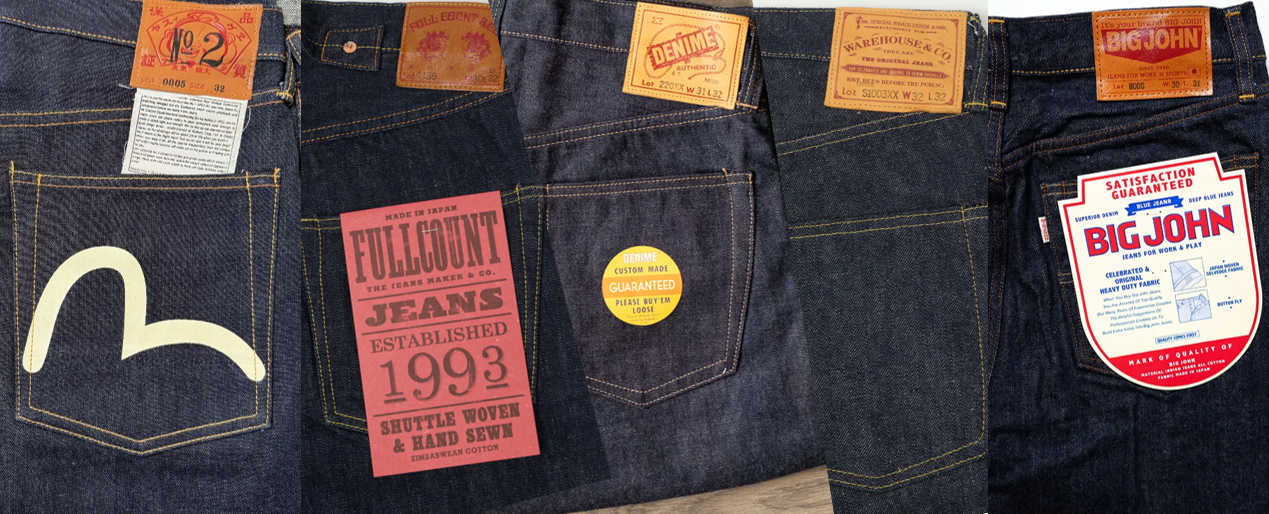
In the 1980s and early 1990s a handful of Osaka makers set out to reproduce vintage American jeans more faithfully than the Americans were still making them. Studio D'Artisan, Denime, Evisu, Full Count and Warehouse became known as the Osaka Five. Their obsession with the yarn, the loom and the details set the standard every brand below still works to.
Studio D'Artisan
Founded in Osaka in 1979 by Shigeharu Tagaki, Studio D'Artisan is usually counted as the first of the Osaka Five. It is known for vintage-faithful jeans with a sense of humour, best seen in the leather patch, and for experiments with natural indigo and unusual cloths alongside its classic straight cuts. Suits: someone who wants the history and enjoys a jean with personality.
Full Count
Full Count was founded in 1992 by Mikiharu Tsujita, and it is known for building its denim around long-staple Zimbabwe cotton. The result is soft from the first wear, comfortable and clean-looking, with a flagship weight of 15.5oz and lighter cloths such as 13.7oz. Suits: anyone who wants an easy break-in and a classic, understated jean.
Warehouse
The Shiotani brothers founded Warehouse in 1995, and the brand's stated aim is the faithful reproduction of vintage garments. The Lot 1001 is its calling card, a 1950s-style straight jean, and the brothers are known for pulling apart original vintage denim to study the yarn and weave. Suits: the vintage purist who wants a jean that looks right to the stitch.
The heavyweights
Iron Heart
Shinichi Haraki founded Iron Heart in 2003 after leaving Edwin, originally to make clothing for motorcyclists. Its signature is 21oz selvedge denim, dense and very hard-wearing, and the range runs from lighter cloths to even heavier specials. Iron Heart's 21oz is often described as cleaner and less slubby than other heavyweights, and it fades with strong contrast over time. Suits: people who are hard on their clothes and want the toughest pair they can buy.
Samurai
Toru Nogami founded Samurai in Osaka in 1997. It made its name with heavy, textured cloth, with weights that have climbed as high as 25oz on special releases, and it also makes more wearable 15oz and 17oz denim. Samurai's cloth tends to be slubbier and more irregular than Iron Heart's. Suits: fade hunters who want heavy denim with plenty of texture.
Oni
Oni is an Okayama brand founded by Masao Oishi, a veteran of the Japanese denim trade since the early days. It is known for some of the slubbiest, hairiest, most irregular cloth made, above all its "Secret Denim", built on thick slub yarns. Oni denim is rough to begin with and fades in streaky, dramatic ways. Suits: someone who wants maximum texture and does not mind a slower break-in.
The texture specialists
Momotaro
Momotaro was founded in Kojima, Okayama, in 2006 by the Japan Blue group. Its jeans are made from Zimbabwe cotton, with options dyed in natural indigo, and the "Going to Battle" line is recognisable by the two white stripes painted on the back pockets. The flagship cloth sits in the mid-heavy range with a pronounced but even slub. Suits: buyers who want a well-made jean with a recognisable identity and rich, high-contrast fades.
Pure Blue Japan
Ken-ichi Iwaya founded Pure Blue Japan in Okayama in 1997. It is famous for deep indigo and textured cloths, especially its slub and nep fabrics woven slowly on low-tension shuttle looms. Models such as the XX-019 relaxed tapered fit are perennial favourites. Suits: people who love texture and a very dark starting colour.
Sugar Cane
Sugar Cane is the denim label of Toyo Enterprise, launched in the 1970s. Its name comes from cloths that blend sugar cane fibre with cotton, used in models named after places where sugar cane grows, though much of its range is cotton denim reproducing vintage American jeans, such as its 1947 model. Suits: a vintage enthusiast who wants something a little different.
The Flat Head
Masayoshi Kobayashi founded The Flat Head in Nagano in 1996 after years of repairing vintage jeans. Its slubby Pioneer denim, introduced in 2001, was hugely influential in the early selvedge scene, and the brand is known for dense, high-contrast fades and careful construction. It continues after a change of ownership. Suits: someone who wants a classic heavyweight with strong fades.
Momotaro vs Iron Heart, Samurai and the rest
These are the head-to-heads people search for most, in plain terms:
- Momotaro vs Iron Heart: Momotaro is textured and refined with a distinctive look; Iron Heart is heavier, denser and built for abuse. Choose Iron Heart for toughness, Momotaro for character.
- Momotaro vs Samurai: both make textured cloth, but Samurai goes heavier and rougher. Momotaro is the easier daily wear.
- Momotaro vs Pure Blue Japan: both are Okayama makers known for slub. Pure Blue Japan is usually more extreme in texture and colour; Momotaro is more even.
- Momotaro vs Oni: Oni is the more irregular, hairier cloth. Momotaro is the gentler starting point.
- Momotaro vs Full Count: Full Count is softer and cleaner; Momotaro has more texture and a bolder identity.
- Iron Heart vs Samurai: both are heavyweight specialists. Iron Heart is denser and more uniform; Samurai is slubbier and more varied from release to release.
How to choose Japanese jeans
- Start with the fit. A great cloth in the wrong cut will never feel right. Compare the measurements of the pair you wear most with each brand's chart; our guide to sizing raw denim shows how.
- Choose a weight. 13 to 15oz is comfortable from day one and wearable most of the year. 17oz and above takes longer to soften, feels warm and fades with stronger contrast.
- Choose a texture. Smooth cloth (Full Count, Iron Heart's 21oz) fades cleanly. Slubby cloth (Pure Blue Japan, Oni, Samurai) fades in streaks and vertical lines.
- Sanforized or not. Sanforized jeans barely shrink and are easier to size. Unsanforized cloth must be soaked first and sized with care.
- Think about how you will wear them. Heavy cloth suits cold weather and hard work; mid-weights suit year-round wear.
There is no wrong answer among these brands. All of them make jeans that will outlast anything from a high street shop by years.
Compare prices and sizes
The same Japanese jeans are often stocked by several independent shops at different prices, and the waist and length you need may be sold out in one and available in another. Browse men's jeans on HARDSTOC to compare every shop at once, or start with a single maker such as Momotaro jeans.
Questions people ask
What is the most famous Japanese denim brand?
Evisu was among the first to become widely known outside Japan, but among enthusiasts today Momotaro, Iron Heart, Samurai and Pure Blue Japan are the names most often recommended.
Are Japanese jeans worth the money?
If you wear jeans often and keep them for years, yes. The cloth is woven slowly on shuttle looms, the construction is careful, and a good pair improves with wear rather than wearing out.
Which Japanese denim is best for beginners?
A sanforized 13 to 15oz jean in a straight or tapered cut, from a maker like Full Count or Momotaro, is the easiest place to start: comfortable early and simple to size.
Where is Japanese denim made?
Most of it comes from Okayama Prefecture, especially Kojima and Ibara, and from neighbouring Hiroshima, home to mills that have woven denim since the 1960s and 1970s.
In this article

MOMOTARO JEANS
0405-SP Going To Battle 15.7oz High Tapered Jeans
€245
W28 in stock

MOMOTARO JEANS
0405-12SP Going To Battle 12oz High Tapered Jeans
€220
W29 in stock

Iron Heart
IH-888s-21od 21oz Selvedge Denim Medium/High Rise Tapered Cut Jeans Indigo Overdyed Black
from US$415 · 3 shops
W29 to W44 in stock

Iron Heart
IH-634S-B Iron Heart 21oz Selvedge Denim Straight Cut Jeans - Indigo Overdyed Black
from US$415 · 3 shops
W29 to W42 in stock

SAMURAI JEANS
S0510XXII 15oz "Otokogi" Regular Straight Jeans
€300
W30 to W44 in stock

SAMURAI JEANS
S0710XX-BOB 15oz "Aoki Tachikage" Black On Blue Slim Straight Jeans
€350
W30 to W44 in stock

Full Count
Fullcount 1108W 13.7oz Slim Straight Jeans
from €280 · 2 shops
W30 to W40 in stock

Full Count
Fullcount 1101W 13.7oz Regular Straight Jeans
from €280 · 2 shops
W29 to W40 in stock

PURE BLUE JAPAN
XX-005 14oz Slim Straight Jeans
€285
W29 to W42 in stock

PURE BLUE JAPAN
XX-019 14oz Selvedge Denim Relaxed Tapered One Wash Indigo
CA$475
W30 to W40 in stock

ONI DENIM
822ZR-LBR Secret Denim Brown Weft Super Wide Tapered 咖啡緯鬼秘超寬微錐形牛仔褲
NT$8,260
W29 to W34 in stock

ONI DENIM
822ZR-OLV Secret Denim Olive Weft Super Wide Tapered 橄欖緯鬼秘超寬微錐形牛仔褲
NT$8,260
W29 to W32 in stock